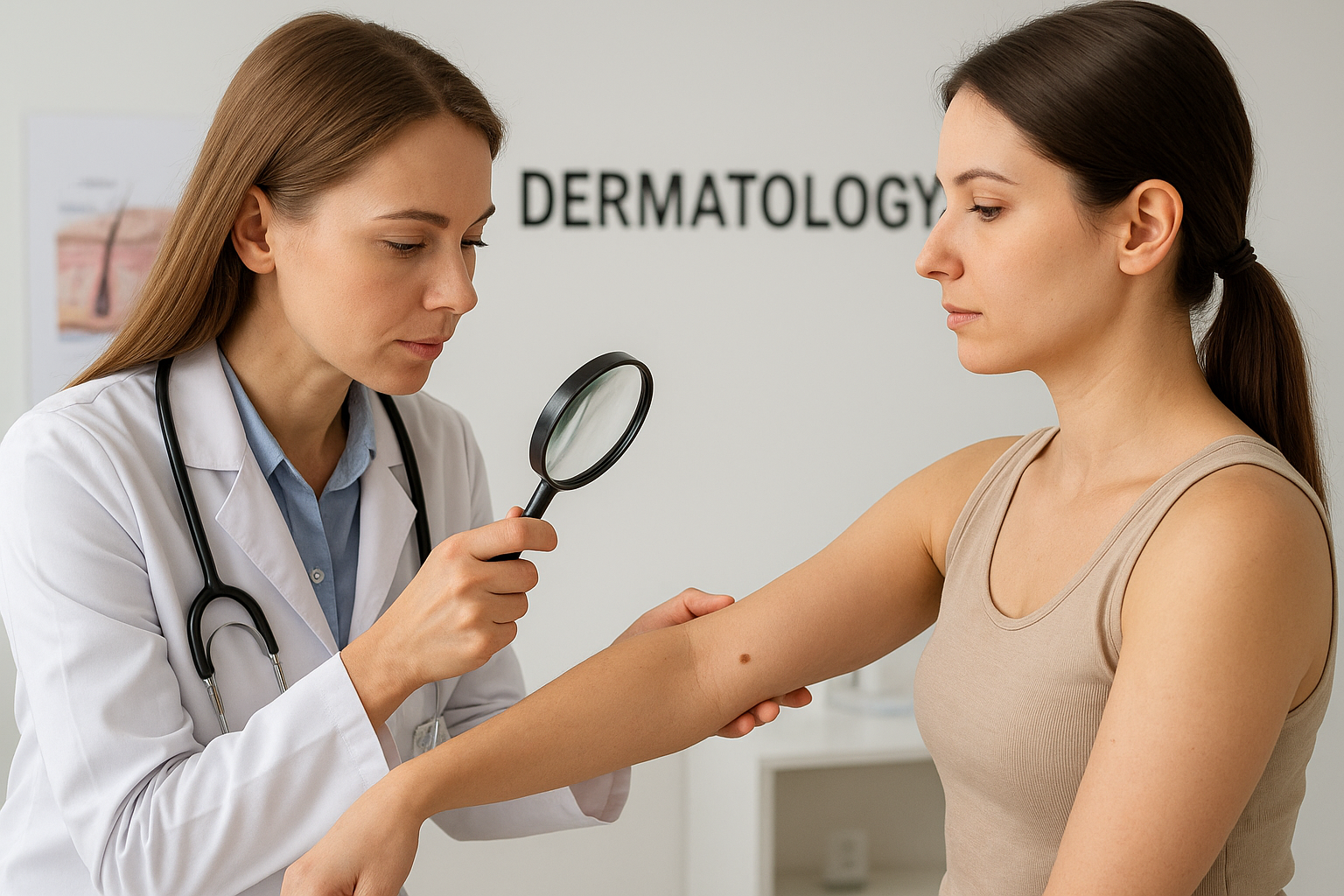
The Top 5 Skin Procedure Coding Challenges: Navigating the Complexities of Dermatological Medical Coding
Procedure Coding
Procedure Coding
Medical coding in dermatology presents unique challenges that can significantly impact revenue cycle management and compliance. As skin procedures become increasingly sophisticated and numerous, medical coders face complex decisions that require deep understanding of both clinical procedures and coding guidelines. The stakes are high – incorrect coding can lead to claim denials, compliance issues, and substantial revenue loss.
This comprehensive guide explores the five most challenging aspects of skin procedure coding, providing insights and strategies to help medical coding professionals navigate these complexities with confidence.

Challenge #1: Distinguishing Between Excision and Destruction Procedures
One of the most common and costly coding errors in dermatology involves the confusion between excision and destruction procedures. This distinction is crucial because it directly affects code selection, reimbursement rates, and compliance requirements.
Understanding the Clinical Difference
Excision procedures involve the complete removal of a lesion by cutting through normal tissue surrounding the abnormal tissue. The removed tissue is typically sent for pathological examination. Common excision procedures include surgical removal of skin cancers, cysts, and suspicious moles. These procedures are coded using CPT codes 11400-11446 for benign lesions and 11600-11646 for malignant lesions.
Destruction procedures, conversely, involve the elimination or eradication of tissue through various methods such as electrocautery, cryotherapy, laser therapy, or chemical application. The tissue is destroyed in place rather than removed for examination. These procedures are coded using CPT codes 17000-17286, depending on the method and extent of destruction.
Common Coding Pitfalls
The primary challenge arises when procedures involve elements of both excision and destruction. For example, a dermatologist might excise a portion of a lesion for biopsy and then destroy the remaining abnormal tissue. In such cases, coders must carefully review the operative notes to determine the primary procedure and code accordingly.
Another frequent error occurs with shave excisions, which are often mistakenly coded as destructions. Shave excisions, while not full-thickness removals, still involve cutting and removing tissue, making them excisions rather than destructions.
Best Practices for Accurate Coding
To avoid these pitfalls, coders should focus on the physician’s intent and the primary method used. Key documentation elements to look for include whether tissue was removed for pathological examination, the depth of the procedure, and the specific technique employed. When in doubt, query the physician for clarification rather than making assumptions.
Challenge #2: Accurate Measurement and Size Documentation
Proper measurement documentation is critical for accurate skin procedure coding, as CPT codes are often stratified by lesion size. However, inconsistent measurement practices and inadequate documentation frequently lead to coding errors and claim denials.
Size-Based Coding Requirements
Most skin procedure codes require specific measurements to determine the appropriate code. For excision procedures, the measurement includes the lesion size plus the narrowest margin of normal tissue removed. This total measurement, not just the lesion size, determines the correct CPT code.
For example, if a 1.2 cm malignant lesion is excised with 0.5 cm margins on all sides, the total excised diameter would be 2.2 cm (1.2 + 0.5 + 0.5), requiring code 11602 rather than 11601.
Documentation Challenges
Common measurement documentation issues include missing measurements, unclear measurement methodology, and inconsistency between pre-operative and post-operative measurements. Some physicians measure only the lesion without including margins, while others provide measurements in different units or use imprecise terms like “small” or “large.”
Pathology reports can sometimes provide measurements, but these may reflect tissue shrinkage due to fixation and may not accurately represent the original excision size. Coders must be cautious about relying solely on pathology measurements without corresponding clinical documentation.
Strategies for Improvement
Healthcare organizations should establish clear documentation standards for measurements, including requirements for pre-operative measurements with margins clearly specified. Training physicians on proper measurement techniques and the coding implications of inadequate documentation can significantly reduce coding errors.
When measurements are missing or unclear, coders should query the physician before submitting claims. Developing template operative notes that prompt physicians to include all necessary measurement data can also improve documentation consistency.
Challenge #3: Complex Anatomical Location Coding
The anatomical location of skin procedures significantly affects code selection and reimbursement rates. Different body areas have different coding structures, complexity factors, and relative value units, making accurate location identification crucial for proper coding.
Understanding Anatomical Code Variations
CPT codes for skin procedures are organized by anatomical regions, each with different code ranges and reimbursement levels. For example, excision codes for the trunk, arms, or legs (11400-11406 and 11600-11606) have different values than those for scalp, neck, hands, feet, or genitalia (11420-11426 and 11620-11626).
The face, ears, eyelids, nose, lips, and mucous membranes represent the highest complexity category (11440-11446 and 11640-11646) due to the cosmetic importance and technical difficulty of procedures in these areas.
Common Location Coding Errors
Frequent errors include misidentifying body regions, particularly around boundary areas. For instance, procedures on the posterior neck might be coded as trunk rather than the higher-reimbursed scalp/neck category. Similarly, procedures near the ear might be coded as face when they should be coded as ear.
Another challenge arises with procedures spanning multiple anatomical regions. Coders must determine the primary location or, in some cases, code multiple locations separately.
Anatomical Precision Strategies
Detailed operative notes specifying exact anatomical locations are essential. Physicians should be encouraged to use precise anatomical terms rather than general descriptions. When procedures span multiple regions, clear documentation of the primary location or separate measurements for each region helps ensure accurate coding.
Coders should familiarize themselves with anatomical boundaries as defined by CPT coding guidelines and maintain reference materials showing these boundaries for quick consultation during coding review.
Challenge #4: Multiple Procedure and Modifier Application
When multiple skin procedures are performed during a single encounter, proper modifier application becomes critical for accurate reimbursement. Understanding when and how to apply modifiers can significantly impact practice revenue and compliance.
Essential Modifiers in Dermatology
Modifier 59 (Distinct Procedural Service) is frequently used when multiple procedures are performed that might otherwise be considered components of a single procedure. This modifier indicates that procedures were distinct and separate services.
Modifier 25 (Significant, Separately Identifiable Evaluation and Management Service) applies when an E&M service is performed on the same day as a procedure, provided the E&M service is significant and separately identifiable from the procedure.
Modifier 51 (Multiple Procedures) is used when multiple procedures are performed during the same session, with the primary procedure receiving full reimbursement and additional procedures receiving reduced payment.
Complex Modifier Scenarios
Challenges arise when determining whether multiple lesions removed during a single session should be coded separately or combined. Generally, each lesion excision is coded separately if performed at different anatomical sites or if lesions are sufficiently distant from each other.
Another complex scenario involves procedures performed on the same lesion using different techniques. For example, a partial excision followed by destruction of remaining tissue might require specific modifier application to indicate the distinct nature of each component.
Multiple Procedure Best Practices
Thorough documentation of each procedure’s location, size, and technique is essential when multiple procedures are performed. Operative notes should clearly indicate when procedures are performed on separate lesions or different anatomical locations.
Coders should be familiar with National Correct Coding Initiative (NCCI) edits that may bundle certain procedure combinations. Understanding these edits helps determine when modifiers are appropriate and when procedures cannot be coded separately.
Challenge #5: Insurance-Specific Coverage and Documentation Requirements
Different insurance providers have varying coverage policies for skin procedures, creating a complex landscape of prior authorization requirements, medical necessity criteria, and documentation standards that coders must navigate.
Medical Necessity Documentation
Insurance companies increasingly scrutinize the medical necessity of skin procedures, particularly for lesions that might be considered cosmetic. Proper documentation must clearly establish the medical need for the procedure, including symptoms, changes in appearance, functional impairment, or malignancy risk.
For benign lesions, documentation should include factors such as bleeding, irritation, pain, or interference with daily activities. Photographs can provide valuable supporting evidence for medical necessity, particularly for lesions in areas prone to trauma or friction.
Prior Authorization Challenges
Many insurance plans require prior authorization for certain skin procedures, particularly those involving multiple lesions or complex reconstructions. The authorization process often requires detailed clinical information, photographs, and justification for the proposed treatment approach.
Failing to obtain required prior authorization can result in claim denials, even for medically necessary procedures. However, prior authorization requirements vary widely among insurers and may change frequently, making it challenging for practices to maintain current knowledge.
Coverage Policy Navigation

Medicare has specific coverage policies for skin procedures, including Local Coverage Determinations (LCDs) that outline coverage criteria for various dermatological conditions. Commercial insurers often have their own policies that may be more or less restrictive than Medicare guidelines.
Strategies for Insurance Compliance
Developing relationships with insurance representatives and staying current with policy updates can help practices navigate coverage requirements effectively. Regular training on changing coverage policies ensures that both clinical and coding staff understand current requirements.
Implementing systematic prior authorization tracking and maintaining comprehensive documentation templates that address common medical necessity criteria can streamline the approval process and reduce claim denials.
Conclusion: Building Excellence in Dermatological Coding
Successfully navigating skin procedure coding challenges requires a combination of clinical knowledge, coding expertise, and attention to detail. The five challenges outlined – distinguishing procedures, accurate measurements, anatomical coding, modifier application, and insurance requirements – represent the most common areas where coding errors occur.
By implementing comprehensive documentation standards, providing ongoing education for both clinical and coding staff, and maintaining current knowledge of coding guidelines and insurance policies, healthcare organizations can significantly improve their dermatological coding accuracy and financial performance.
The key to success lies in recognizing that dermatological coding is not merely a technical exercise but a critical component of patient care that ensures appropriate reimbursement for necessary medical services. As the field of dermatology continues to evolve with new procedures and technologies, maintaining coding excellence will require ongoing commitment to education and process improvement.
Investing in proper training, documentation systems, and quality assurance processes will pay dividends in reduced claim denials, improved compliance, and enhanced revenue cycle performance. The complexity of skin procedure coding challenges should be viewed not as obstacles but as opportunities to develop expertise that differentiates high-performing healthcare organizations in an increasingly competitive environment.